Buying Property in Japan: A Simple Step-by-Step Guide for Overseas Clients
Buying property in Japan as a non-resident can feel complicated at first.
There are language barriers, unique procedures, and strict documentation requirements — and many of my international clients initially feel unsure about where to start.
However, once you understand the overall process, it becomes much more straightforward than it seems.
In this guide, I’ll walk you through the actual step-by-step process based on real transactions, so you know exactly what to expect.
Step-by-Step Process of Buying Property in Japan
Before going through the step-by-step process, it’s important to understand the total costs involved when buying property in Japan.
You can read our full cost breakdown here:
How Much Does It Cost to Buy Property in Japan?
The process typically follows these steps:
Step 1: Property Viewing
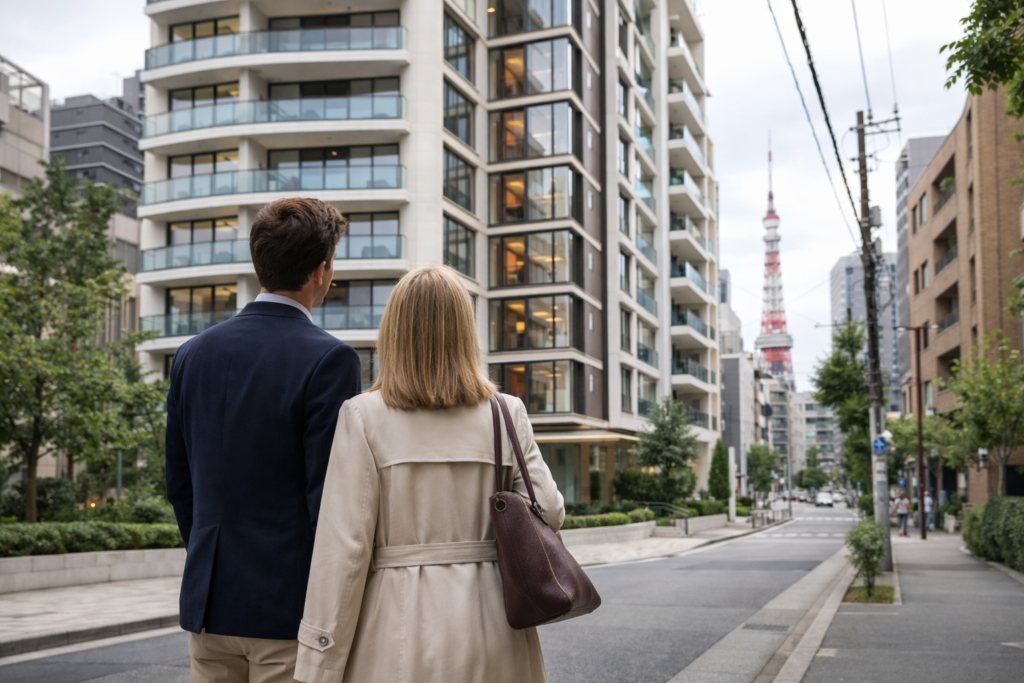
In most cases, the process starts with viewing properties that match your general preferences.
Some clients already have specific properties in mind, while others begin by discussing their criteria — such as location, budget, layout, and intended use as a second home.
Based on this, we usually create a shortlist and carefully plan the viewings in advance.
It is important to understand how property viewings are arranged in Japan.
Each property is handled by a different listing agent on the seller’s side, and their availability varies. Some agencies are closed on certain days of the week, and appointments often need to be scheduled in advance.
For this reason, viewings in Japan are not always something that can be arranged at short notice. Careful planning before your visit is essential.
In most cases, the listing agent will ask for basic background information about the buyer when arranging viewings.
This typically includes details such as where you are based, your occupation, family situation, whether the purchase will be made in cash or with financing, and your intended timeline.
This may feel unusual, but it is a common practice in Japan. It helps the seller and their agent understand the buyer’s situation and level of readiness before proceeding.
I will guide you through what information is appropriate to share and how to handle these requests smoothly.
At the same time, the role of your buyer’s agent is to coordinate all of these arrangements on your behalf.
In Japan, most properties are shared across agents through a common database, which means that working with multiple agents does not necessarily give you access to more listings.
For this reason, it is generally more effective to work closely with one trusted advisor who understands your preferences and can guide you throughout the process.
Many of my overseas clients review potential options in advance, and we coordinate the viewing schedule together to make the most of their limited time in Japan.
Another important point is that a property can feel very different in person compared to photos.
I always encourage clients to not only visit the property itself, but also walk around the neighborhood, check the surrounding environment, and experience the actual distance from the nearest station.
These are things that cannot be fully understood online, but often make a significant difference in the decision-making process.
Step 2: Submission of Purchase Application
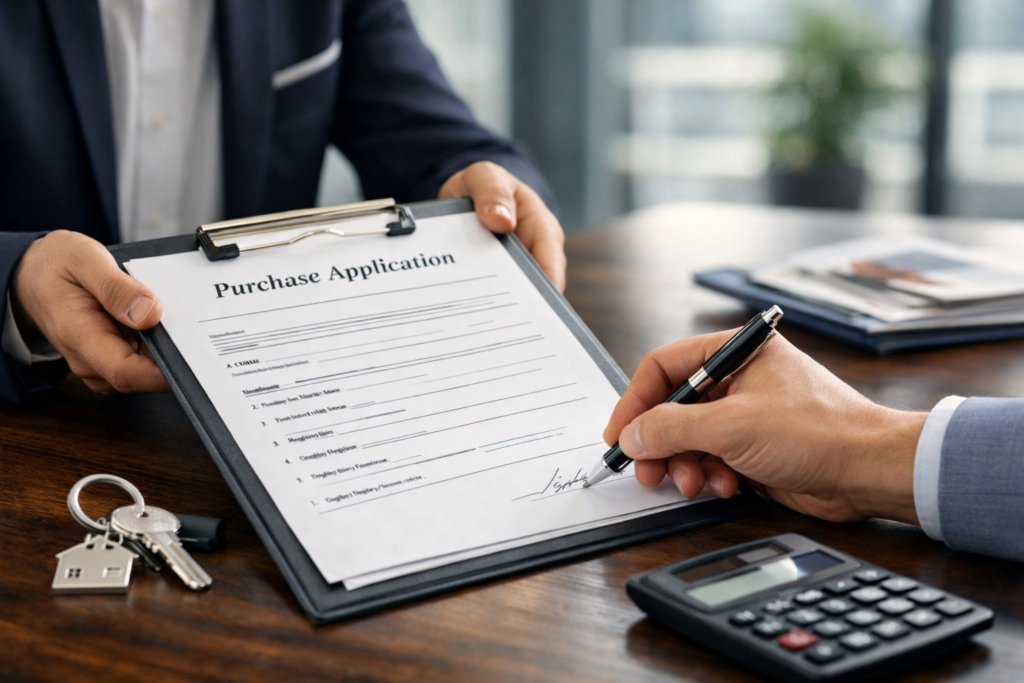
Once you have selected a property, the next step is to submit a Purchase Application, also known as a Letter of Intent (LOI).
This document outlines your intention to purchase and presents your proposed terms to the seller.
Typically, the application includes basic buyer information, proposed purchase price, payment method (cash or financing), and key conditions of the purchase.
While not legally binding, the Purchase Application is a critical step in the process, as it forms the basis for negotiation.
In some cases, particularly for international buyers, sellers may request confirmation of financial capability at the time of application.
Cash buyers may be asked to provide proof of funds, while buyers using financing may be required to submit loan pre-approval.
For this reason, it is advisable to have these documents prepared in advance.
Key Considerations
In Japan, the approach to price negotiation differs from many overseas markets.
In Tokyo, particularly in desirable areas, properties are generally transacted at or very close to the asking price.
While minor negotiation may be possible in some cases, especially for properties that have been on the market for an extended period, significant discounts are uncommon.
For this reason, it is important to carefully consider your initial offer, as overly aggressive pricing may reduce the likelihood of your application being seriously considered.
In addition, sellers tend to favor buyers who can proceed smoothly.
Cash buyers are typically viewed more favorably, while buyers using financing are often required to demonstrate loan pre-approval or financial readiness.
Step 3: Agreement & Transaction Preparation
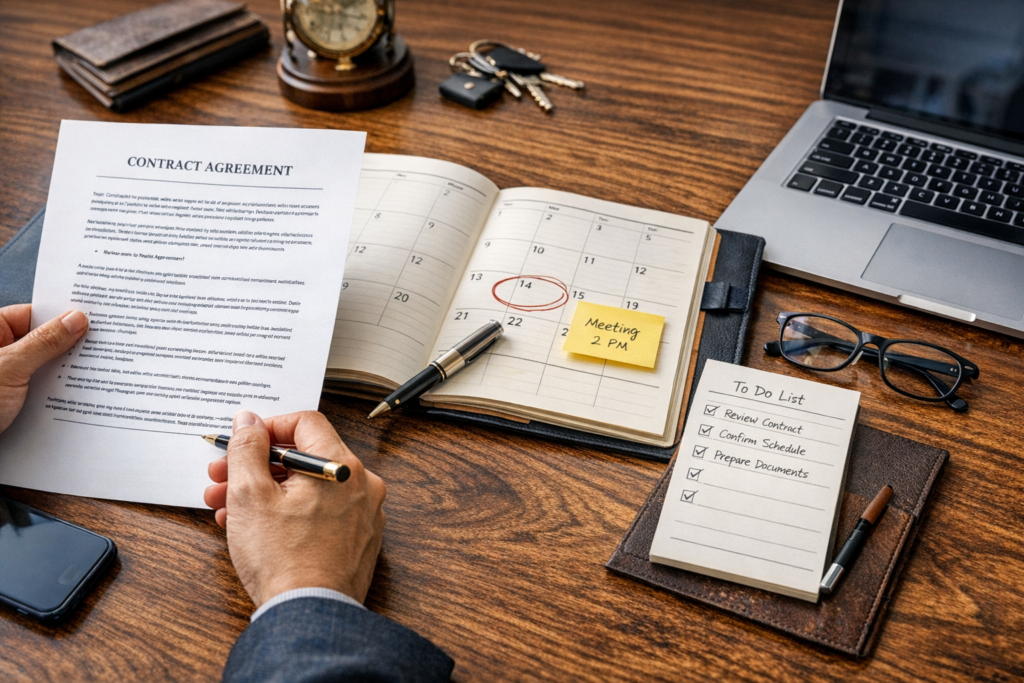
Once the seller accepts your application and both parties reach an agreement, the transaction moves into the preparation stage.
At this point, key details such as the contract date and closing schedule are coordinated between the buyer and seller.
The seller’s agent will begin preparing the contract documents, which typically takes several days.
During this stage, overseas buyers should confirm in advance which documents will be required for the contract and closing, such as identification documents or affidavit if applicable.
Timeline and Process
The time required to reach agreement can vary depending on the situation.
In many cases, sellers respond within a few days to one week.
However, in some instances, particularly when multiple parties are involved, it may take longer.
Once terms are agreed, the process moves forward with document preparation and scheduling of the contract.
Preparing for the Next Step
After agreement is reached, both parties proceed with final arrangements for the contract signing.
This includes reviewing the draft contract, confirming the schedule, and coordinating the next steps toward execution.
Once preparations are complete, the process moves forward to contract signing and deposit payment.
Step 4: Contract Signing and Deposit Payment

Once all preparations are complete, the transaction proceeds to contract signing.
Typically, the contract date is scheduled within approximately 7 to 10 days after the price agreement is reached.
For this reason, it is important for buyers to be fully prepared, as arrangements such as document review and fund transfers must be completed within a relatively short timeframe.
Explanation of Important Matters
Before signing the contract, a licensed real estate agent will provide an Explanation of Important Matters.
This step ensures that the buyer fully understands the key details of the property and the terms of the transaction.
The explanation can be conducted in person or online (e.g. via Zoom), depending on the buyer’s location.
Please note that the contract documents are generally prepared in Japanese.
Contract Signing
On the contract date, the purchase agreement is formally signed by both the buyer and seller.
If the buyer is unable to be present in Japan, it is possible to appoint a representative through a Power of Attorney (POA).
However, this arrangement must be prepared in advance, so early coordination is essential.
Deposit Payment
At the time of contract signing, the buyer is required to pay a deposit, typically around 5% to 10% of the purchase price.
This deposit is non-refundable once the contract is executed.
For international buyers, it is important to arrange the bank transfer in advance, as transfers may take several days to complete.
The exact payment method and transfer schedule should be confirmed in advance with your agent and the parties involved.
Once the contract is signed and the deposit is received, the transaction moves toward final payment and closing.
Step 5: Final Payment and Closing
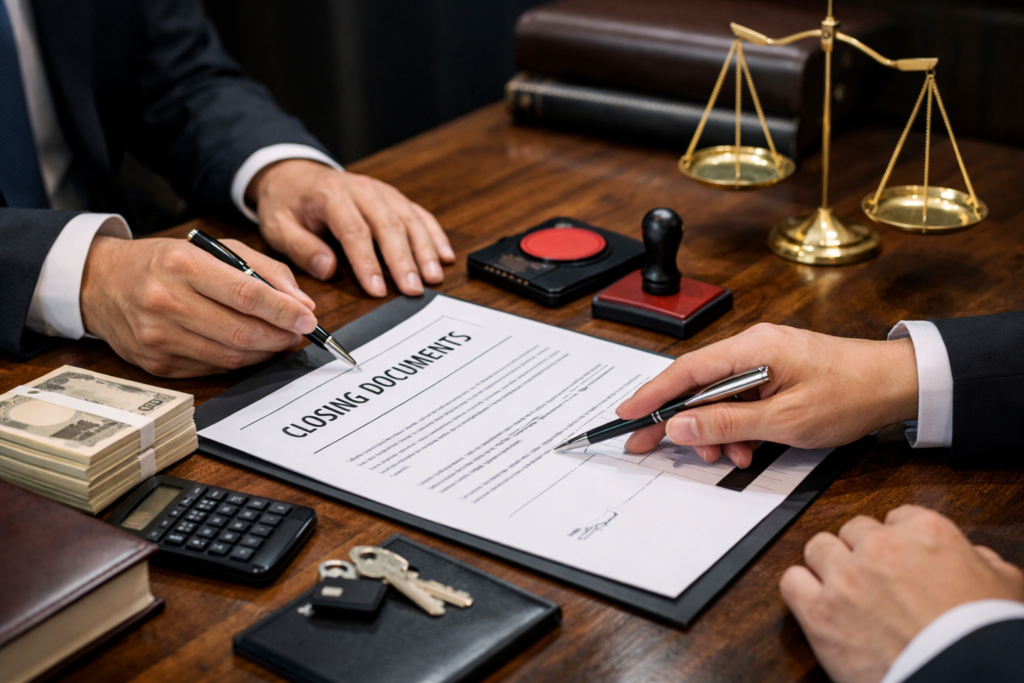
After the contract has been signed, the transaction moves toward final payment and closing.
Timeline
In many cases, the closing is scheduled approximately one month after the contract signing.
However, the timeline may vary depending on the circumstances.
For buyers using financing, additional time may be required for the loan approval process.
In the case of occupied properties, the closing schedule is typically determined in consultation with the seller, as time may be needed for the current occupant to vacate.
As a result, the process may take several months in such cases.
Final Payment
The remaining balance of the purchase price is paid prior to the closing date.
For international buyers, it is important to allow sufficient time for bank transfers, as processing times may vary depending on the country and bank.
Closing Process
On the closing date, the ownership of the property is officially transferred from the seller to the buyer.
This process is usually conducted in the presence of a judicial scrivener (shiho-shoshi), who verifies the identities of the parties and completes the legal registration.
Step 6: Property Handover and Post-Purchase Support
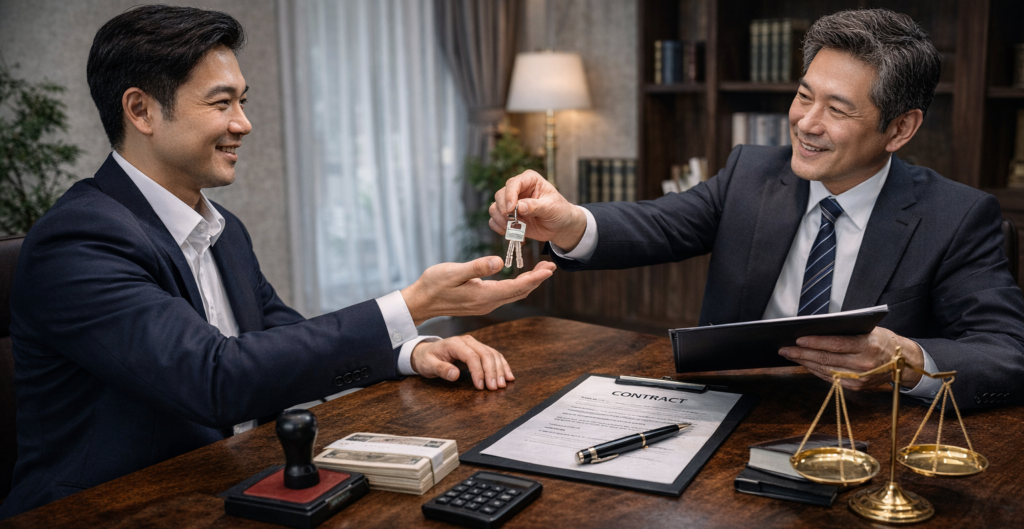
After the closing is completed, the ownership of the property is officially transferred to the buyer, and the property is handed over.
At this stage, the buyer receives the keys and can begin using the property.
After Purchase Considerations
For overseas buyers, managing a property in Japan can present certain challenges.
Tasks such as utility payments, tax handling, and property maintenance often require local coordination, particularly for those who do not reside in Japan.
In some cases, overseas owners may also face difficulties in setting up local bank accounts or managing payments.
In many transactions, real estate agents are involved only until the purchase is completed, leaving owners to manage these responsibilities independently.
Our Ongoing Support
To ensure a smooth ownership experience, we provide ongoing support through our affiliated property management services, which have extensive experience working with international clients.
Our services include:
- Utility and tax payment support
- Property management and maintenance
- Periodic inspections and cleaning
- Second-home management services
For clients who may consider rental use, we can also provide leasing and property management support.
A Seamless Ownership Experience
To ensure a smooth ownership experience, our clients are supported not only during the purchase process, but also after completion through our affiliated property management services.
This structured support system allows for ongoing assistance with property management and local coordination, providing peace of mind for overseas owners.
Required Documents for Overseas Buyers
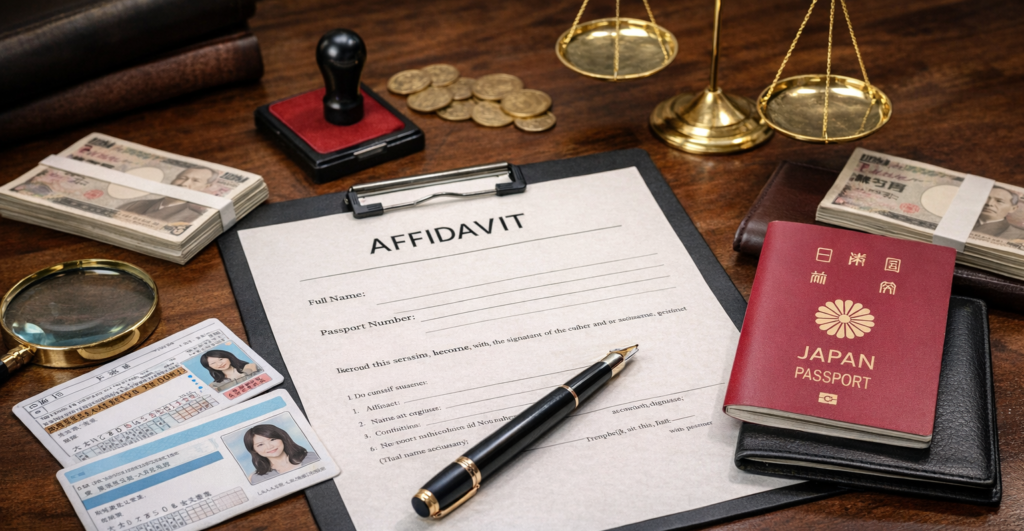
Overseas buyers are generally required to prepare several identification and legal documents before signing and closing.
The exact documents may vary depending on your country of residence, ownership structure, and whether you are purchasing as an individual or a corporation.
Identification Documents
Buyers are typically required to provide identification such as:
- Passport
- Government-issued ID (e.g. driver’s license)
Copies are usually required in color and may need to include both sides.
Affidavit
In many cases, overseas buyers are required to submit an affidavit.
This document is typically issued or notarized in the buyer’s home country and confirms personal details for legal purposes in Japan.
The required format may vary depending on the country of residence and whether the buyer is an individual or a corporation.
Important Notes
As obtaining an affidavit may require in-person procedures in your home country, it is strongly recommended to prepare this document in advance before traveling to Japan.
Preparing the required documents ahead of time can help avoid delays and unnecessary travel.
If you are unsure about the required format or process, we can assist in confirming the necessary documentation for your specific situation.
Understanding the total cost is also an important part of the buying process.
Before making a decision, we recommend reviewing all the initial costs involved.
Read our full guide on the cost of buying property in Japan:
How Much Does It Cost to Buy Property in Japan?
Considering a Property Purchase in Tokyo?
We provide carefully curated property options, private viewings, and personalized support throughout the entire purchase process.