Risks of Buying an Old Apartment in Japan
One of the first questions I often receive from clients is:
“Should I only look at newer apartments?”
It’s a very natural concern.
While newer properties may feel safer, they are not always the best option — especially when it comes to location and value in Tokyo.
In reality, many of the most interesting opportunities are found in buildings that are 20–30 years old.
However, older properties come with risks that are often underestimated, particularly by overseas buyers.
In this article, I’ll walk you through the key points you should carefully consider before buying.
1.Earthquake Resistance (Old vs New Standards)
One of the most important factors is whether the property meets the current earthquake resistance standard.
In Japan, buildings approved before 1981 follow the old seismic standard (旧耐震基準). For a more detailed explanation, you can read our guide on Japan’s earthquake building standards. These buildings may not be designed to withstand major earthquakes at the same level as newer properties.
What to check:
- Is there a seismic compliance certificate?
- Was the building constructed after 1981?
- Has it been retrofitted?
2. Structural Aging & Infrastructure Issues
Older buildings naturally face physical deterioration over time.
Common issues include:
- Concrete degradation
- Corrosion of reinforcing steel
- Aging water pipes and drainage systems
These problems may not always be visible but can lead to costly repairs later.
3. Rising Repair Fund & Maintenance Costs
As buildings age, maintenance costs increase significantly.
In many older condominiums:
- Repair reserve funds (修繕積立金) may be insufficient
- Monthly fees can rise sharply
- Large-scale renovations become more frequent
Important:
Even if you don’t live in the property, these costs continue every month.
4. Financing & Tax Limitations
Older properties may face financial disadvantages.
- Mortgage approval may be stricter
- Loan periods can be shorter
- Some properties may not qualify for tax deductions
For example, without a seismic compliance certificate, buyers may lose access to certain tax benefits.
Financing conditions can also vary depending on whether you are purchasing with cash or using a mortgage.
For more details, you can read our guide on cash vs mortgage options in Japan.
5. Management & Resident Issues
Another often-overlooked factor is the management quality.
In some older buildings:
- The residents’ association may be aging
- Decision-making can be slow
- Major renovations or rebuilding may be delayed
This directly affects the long-term value of the property.
6. Additional Risks (Often Overlooked)
- In some much older buildings (typically over 40 years old), materials such as asbestos may have been used
- Higher risk of plumbing leaks
- Pest issues may be more common
These factors are not always disclosed clearly and require careful inspection.
What This Means for Buyers
Every property is different, and the right choice depends on your priorities.
While older apartments in Tokyo do come with certain risks, it’s important to understand that not all older properties are bad.
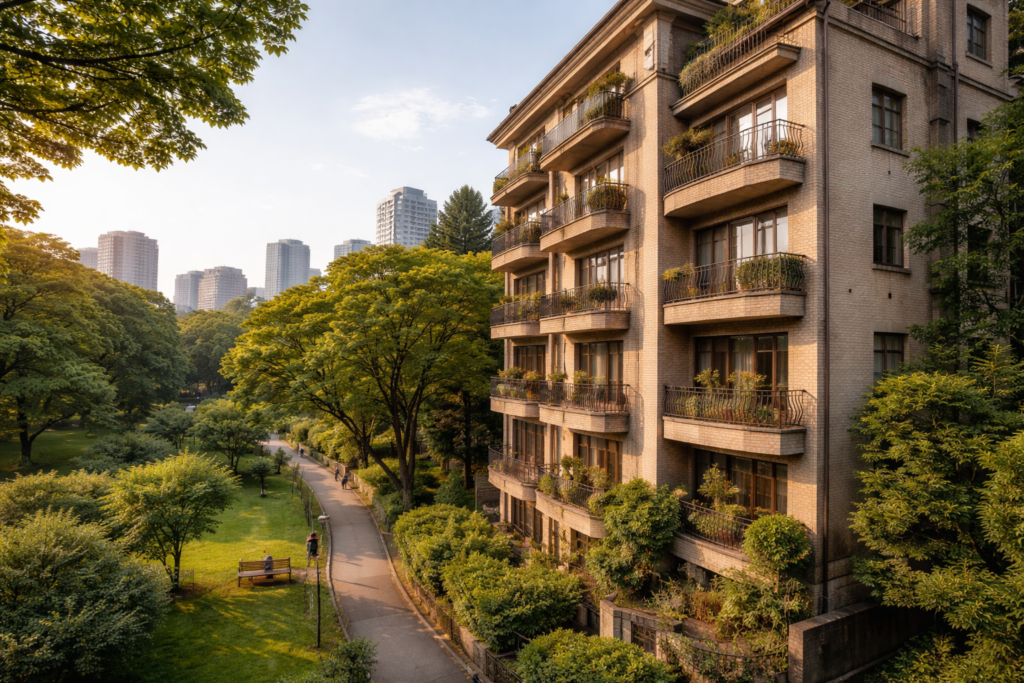
In fact, many older buildings are located in prime areas that are difficult to replicate today — such as those next to large parks, with open views, or in well-established residential neighborhoods.
From my experience, some of the best opportunities can actually be found in buildings that are around 20–30 years old, especially if they have been well maintained or renovated.
Also, depending on the buyer’s situation — for example, cash buyers or those prioritizing location — some of these risks may be less relevant.
The key is not to avoid older properties entirely, but to understand the risks and evaluate each property carefully.
From my experience working with international buyers, the right balance between building age, location, and management is often more important than age alone.
If you are new to the process, you may also find it helpful to understand the overall buying process and associated costs in Japan.
If you are considering purchasing property in Tokyo, I would be happy to support you and help you navigate these factors based on your specific needs.
Looking for the right property in Tokyo?
There are several important factors to consider, especially when comparing older and newer apartments.
We provide carefully selected property options and personalized guidance based on your priorities.