How Much Does It Cost to Buy Property in Japan? | Initial Costs Guide
Buying property in Japan involves more than just the property price.
In addition to the purchase price, buyers should also budget for various initial costs such as brokerage fees, registration costs, stamp duty, insurance, and taxes.
Many overseas buyers are unsure how much these costs will be, and this can make it difficult to plan a realistic budget.
Having a rough estimate in advance will help you understand your total budget and move forward with confidence.
In this guide, we explain the typical initial costs involved when buying property in Japan and what they usually include.
Quick Answer
For many resale property purchases in Japan, initial costs are often around 6% to 8% of the purchase price. This is a general guideline based on typical resale transactions in Japan.
If you use financing, additional loan-related fees may also apply.
Please note that the total amount may vary depending on the property type, location, and transaction structure.
Typical initial costs may include:
・Brokerage fee
・Registration and judicial scrivener fees
・Stamp duty on the purchase agreement
・Prorated management fee and repair reserve fund
・Prorated fixed asset tax and city planning tax
・Fire insurance
・Real estate acquisition tax
・Registration of Domestic Contact (for Overseas Owners)
Typical Initial Costs
The following is a breakdown of the typical initial costs when purchasing property in Japan.
Brokerage Fee
In Japan, when you purchase a property through a real estate agent, a brokerage fee is typically charged.
Generally, each party (buyer and seller) pays a brokerage fee to their respective agent.
For most transactions, the commonly used brokerage fee is calculated as:
Property Price × 3% + ¥60,000 + consumption tax
This fee is based on the standard set by Japanese regulations and is widely used in practice.
The brokerage fee is often paid in two stages: part at the time of contract and the remaining balance at closing.
Depending on the agency, it may also be possible to pay the full amount at closing, which can be more convenient for some buyers.
Registration and Judicial Scrivener Fees
When purchasing property in Japan, ownership must be officially registered under the buyer’s name.
This process involves registration taxes and professional fees paid to a judicial scrivener, who handles the legal procedures on behalf of the buyer.
The total cost varies depending on the property value and whether financing is used, but it is typically one of the larger components of the initial costs.
These fees are usually paid at the time of closing.
A judicial scrivener plays an important role in ensuring a secure and legally compliant transaction.
Stamp Duty on the Purchase Agreement
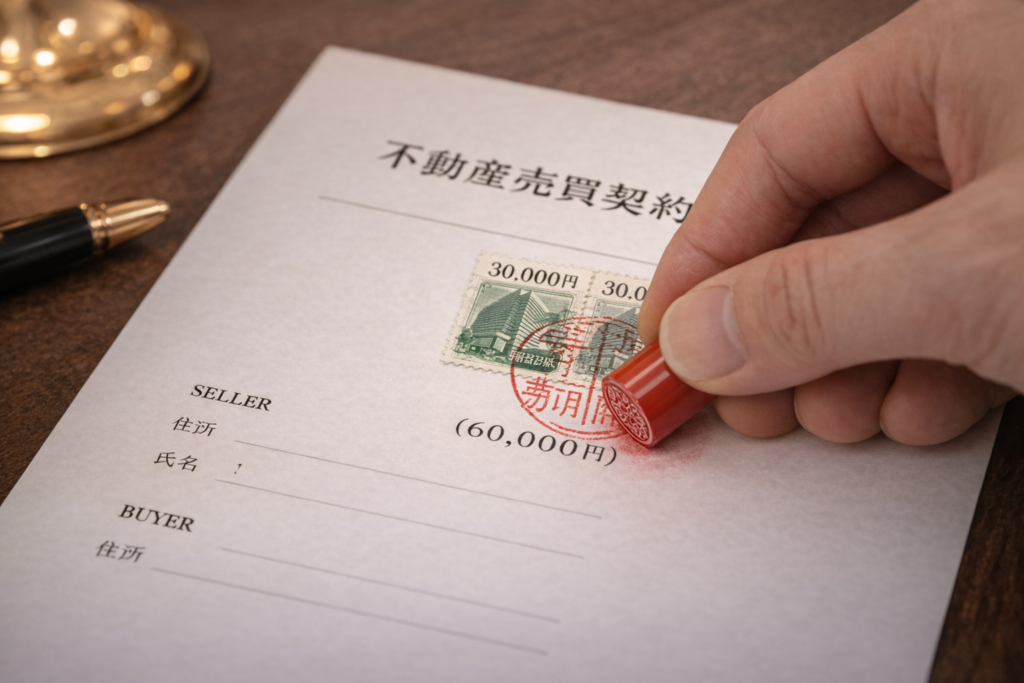
In Japan, the sale and purchase agreement is generally subject to stamp duty.
The amount of stamp duty depends on the contract price and is determined based on a fixed tax table.
For higher-priced properties, which are common among international buyers, stamp duty is typically around ¥60,000 for transactions above ¥100,000,000, and may increase to around ¥160,000 for properties exceeding ¥500,000,000 under the current reduced tax rates.
Stamp duty is usually paid at the time of signing the contract.
Please note that the applicable tax rates and amounts may change, so it is important to confirm the latest information at the time of purchase.
Additional Costs at Closing
In addition to the main transaction costs, there are several prorated and administrative expenses that are typically settled at the time of closing.
These costs ensure a smooth transfer of ownership and proper allocation of ongoing expenses between the buyer and the seller.
Prorated Management Fee & Repair Reserve Fund
For condominium properties, the monthly management fee and repair reserve fund are shared between the buyer and seller at the time of closing.
These costs are calculated on a daily prorated basis for the month of transfer, so that each party pays only for their period of ownership.
In addition, it is common for the buyer to pay one to two months of these fees in advance as part of the initial costs.
This helps avoid immediate payment requests after closing and ensures a smoother transition of ongoing payments.
Prorated Fixed Asset Tax & City Planning Tax
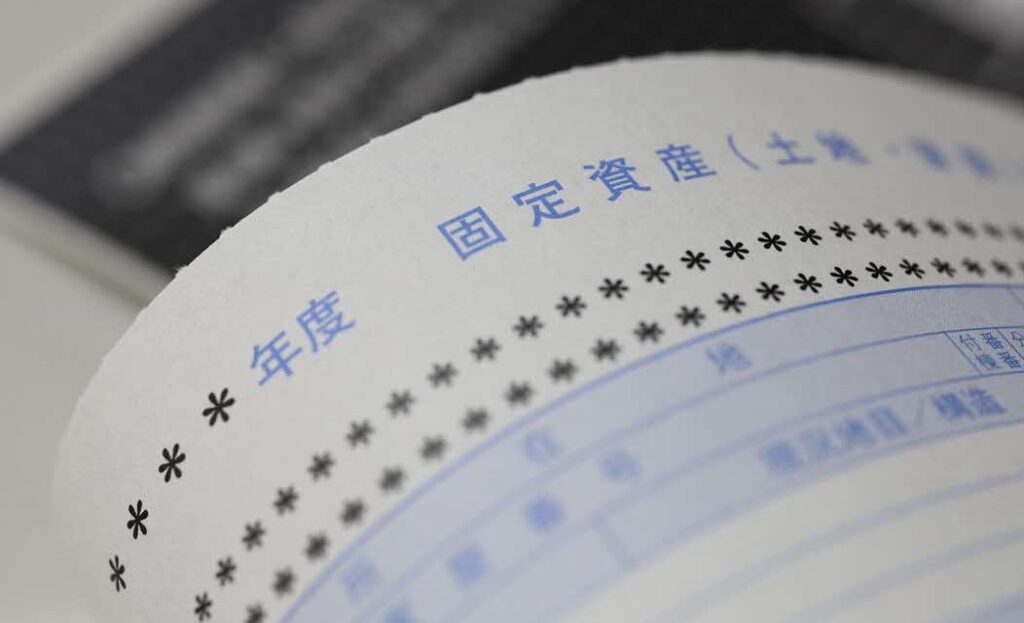
In Japan, annual property taxes (Fixed Asset Tax and City Planning Tax) are billed once per year to the registered owner as of January 1.
As a result, the seller has typically already paid the full amount for the year.
At closing, these taxes are adjusted between the buyer and seller on a daily prorated basis.
The buyer reimburses the seller for the portion corresponding to their ownership period within that year.
From the following year onward, the buyer will be responsible for paying these taxes annually.
Fire Insurance

Fire insurance is required when owning property in Japan and is typically arranged prior to closing.
Coverage usually starts from the date of handover (closing), so the policy needs to be prepared in advance.
In addition to standard fire insurance, buyers may choose to include earthquake insurance depending on their preference.
The coverage period can also be selected, commonly ranging from one to five years.
Premiums vary depending on the property type, structure, location, and level of coverage.
Real Estate Acquisition Tax
This is a one-time tax imposed after purchasing property in Japan.
The amount is typically around 3%–4% of the assessed value, rather than the purchase price.
This tax is not included in the closing costs and is billed separately several months after completion.
Because the payment notice is sent after the transaction, it is important to ensure that it can be properly received and handled, especially for overseas buyers or second-home owners.
In some cases, tax reductions may apply depending on the property type and usage, such as properties intended for personal residential use.
Registration of Domestic Contact (for Overseas Owners)

Under recent regulations, overseas property owners may be required to register a domestic contact in Japan for administrative and legal purposes.
This contact is used to ensure that official notices and communications can be properly received.
If the owner does not have a suitable contact in Japan, it is necessary to arrange one in advance. This may need to be arranged in advance depending on the buyer’s circumstances
Summary
The initial costs of purchasing property in Japan typically range from approximately 6% to 8% of the purchase price.
While the structure of these costs is generally consistent, the exact amount may vary depending on the property, ownership structure, and individual circumstances.
Understanding these costs in advance helps ensure a smooth and well-prepared transaction.
Ongoing Costs After Purchase
In addition to the initial costs, property ownership in Japan involves ongoing expenses such as management fees, repair reserve funds, utilities, and property taxes.
For overseas owners, it is also important to consider how these payments will be managed, as setting up local payment arrangements may require additional planning. Support for ongoing management and payment handling may be arranged if needed.
Understanding the buying process is just as important as knowing the costs.
If you are new to purchasing property in Japan, we recommend reviewing the full step-by-step guide.
Read our guide here:
Buying Property in Japan: A Simple Step-by-Step Guide for Overseas Clients
Considering a Property Purchase in Tokyo?
If you are considering purchasing property in Japan, it is important to review the details based on your specific situation.